
Articles by Michał Grzebyk

ChatGPT Wallet: who makes the decision when you delegate shopping to AI?
ChatGPT Wallet lets agents pay on a user’s behalf. But who chooses the product and rules out the alternatives first? We explain the scope of delegated shopping and why data, sources and accurate brand representation matter.
Artificial, collaborative, super: what do the names we give AI promise?
Sebastian Kondracki, Donald Trump and a Polish abbreviation show how different names for AI shape expectations. A sourced map of terms and the research behind their effects.
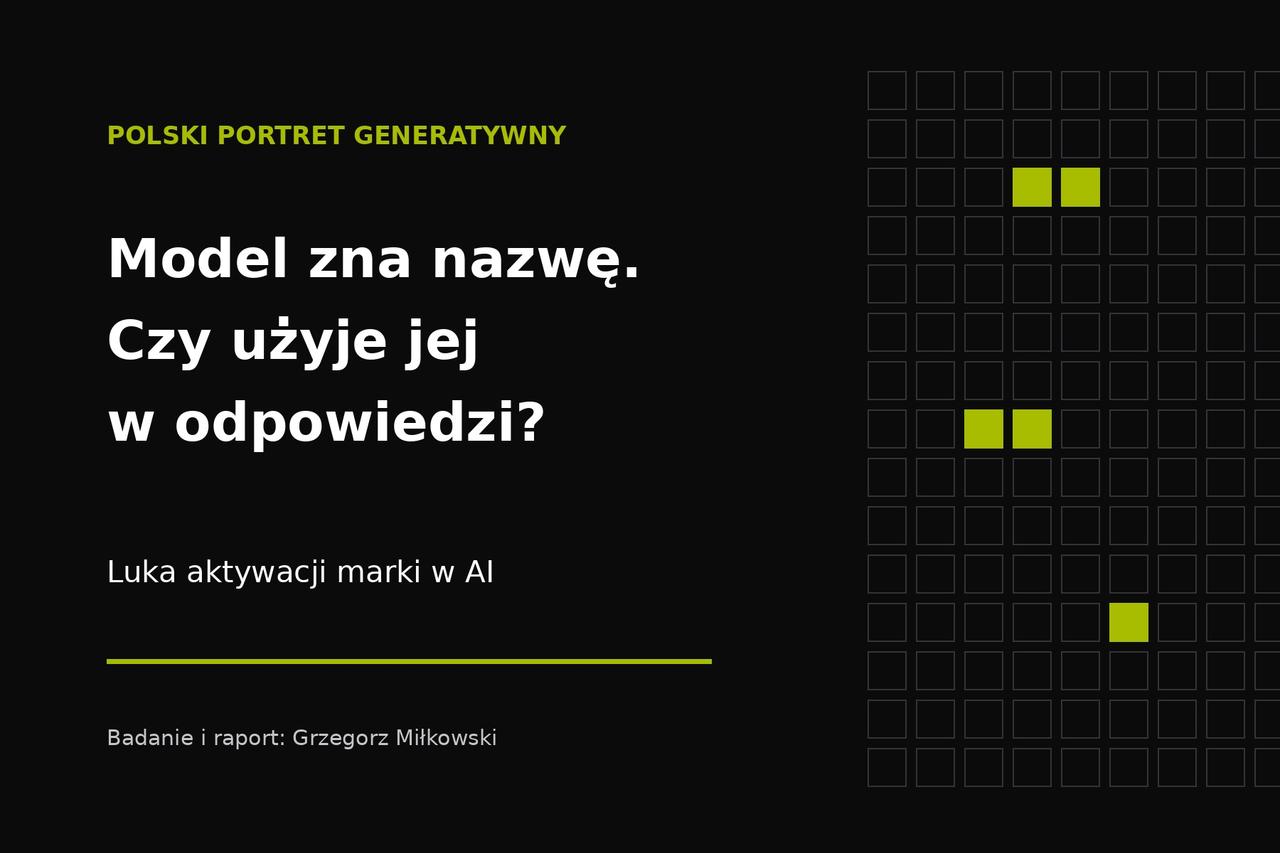
A recognised brand missing from the decision: what “Polish Generative Portrait” reveals about the activation gap
A model may know a brand yet fail to mention it when someone is looking for a solution. Grzegorz Miłkowski’s research shows where this gap comes from and how to measure it.

ChatGPT knows what you are looking for. Could it also know what you can afford?
ChatGPT is bringing product discovery, virtual try-on and ads into one environment, while users in the US can also connect personal finance data. Could these features make shopping more personal, and what do we know about how their data may connect?

Microsoft is consulting on AI rules. What Humanist AI promises, and what it still has to prove
Microsoft is asking the public to shape the rules for its future MAI models. Its Humanist AI Code of Conduct sets out ambitious principles, but its value will depend on whether those principles become testable behaviour, transparent evaluation and real accountability.

Entity Mapping Lacks Direction
Entity mapping organises products, audiences, issues, and sources, yet it fails to address which relationships are strategically most important for the brand. Why does a brand need not only a map but also a clearly defined direction?

Keywords are not entities. How to build content around what users actually mean?
Keywords reveal how people search. Entities, attributes and relationships explain what content needs to clarify. Learn how to connect both layers in a practical content model.

AI visibility is not one metric. How to measure mentions, recommendations, citations and representation?
AI visibility is not one score. Learn how to measure mentions, recommendations, citations and brand representation using clear denominators, research panels and uncertainty.

How to run an AI visibility audit: presence, citations, hallucinations and stability
Learn how to audit AI visibility beyond mentions: test presence, recommendation role, factual accuracy, citations and response stability across generative search systems. A practical framework for identifying representation gaps and turning them into proportionate action.
GEO after SEO. What can actually be optimised in AI search?
Brands can optimise their information assets and access conditions. They can only influence retrieval, citation, absorption and recommendation. The GEO control surface provides a practical model for distinguishing controlled interventions from observed outcomes.

The "Right" Candidate: How AI Models Can Transform Local Elections – A Case Study of Kraków
GenAI models not only summarise information about candidates but also shape their public image. Through the research of Michał Drewnicki, I illustrate why a name alone is insufficient in local elections.

The Chicken, the Spade, and Your Favourite Chatbot: Why the Brain Lies to Justify Itself
What distinguishes the functions of the left and right hemispheres of the brain? What is the left brain interpreter, and how does it relate to the operation of LLMs? Discover more in this article!